History of Ho Chi Minh City
Ho Chi Minh City (HCMC) is a city with a storied past. Formerly known as Saigon, the city was ruled by many dynasties with the last being the Nguyen dynasty, thus many Vietnamese carry this as their last name.
The French attacked and captured Saigon in 1859 and officially named it the capital of the colony of Cochinchina in 1862. For a brief period between 1887-1901, it even served as the administrative center for the entire Indochinese Union which included Vietnam, Cambodia, and Laos. Though eventually the capital was moved to Hanoi, under the 100 year French Rule, Saigon was known as the Pearl of the East.
After the Japanese occupation during World War II and the First Indochina War (or the French War as the Vietnamese call it), the country was split in two at the 17th parallel and Saigon served as the capital of the Republic of Vietnam (South Vietnam).
Saigon remained the capital of South Vietnam from 1954-1975 until the reunification of the north and south at the end of the Vietnam War or the American War as the Vietnamese call it. Saigon was renamed to Ho Chi Minh City in 1976 to honor the late revolutionary leader of the Viet Minh, Ho Chi Minh who died before seeing his country reunified.
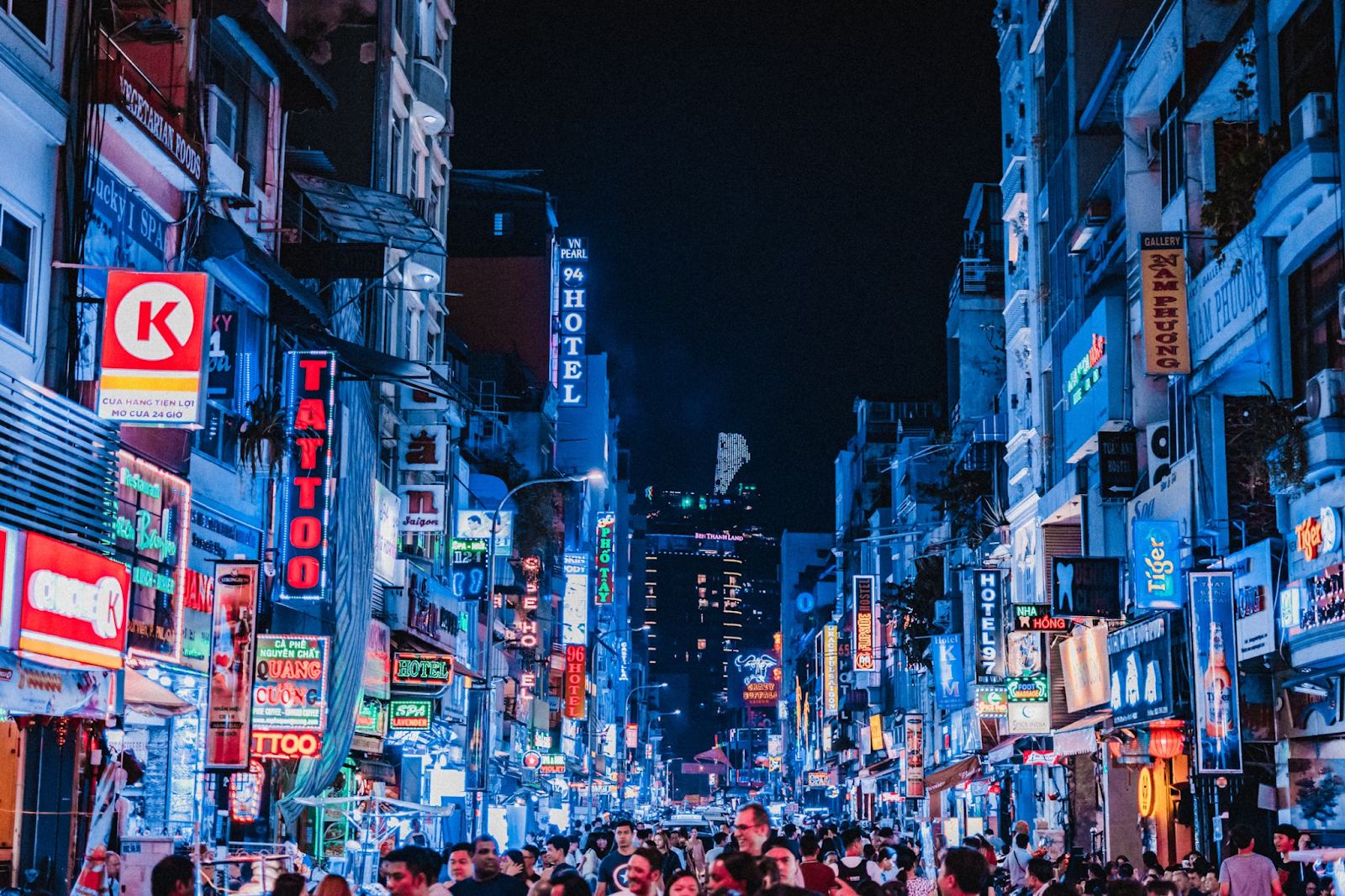
Though no longer the capital of Vietnam, HCMC is the largest city in Vietnam with a population of 14 million people. As Vietnam’s economic hub with a complex history, HCMC features a combination skyscrapers and French colonial architecture. Vibrant street culture mixes with an increasingly cosmopolitan lifestyle, providing a variety of things to do for visitors.
EXPLORE!