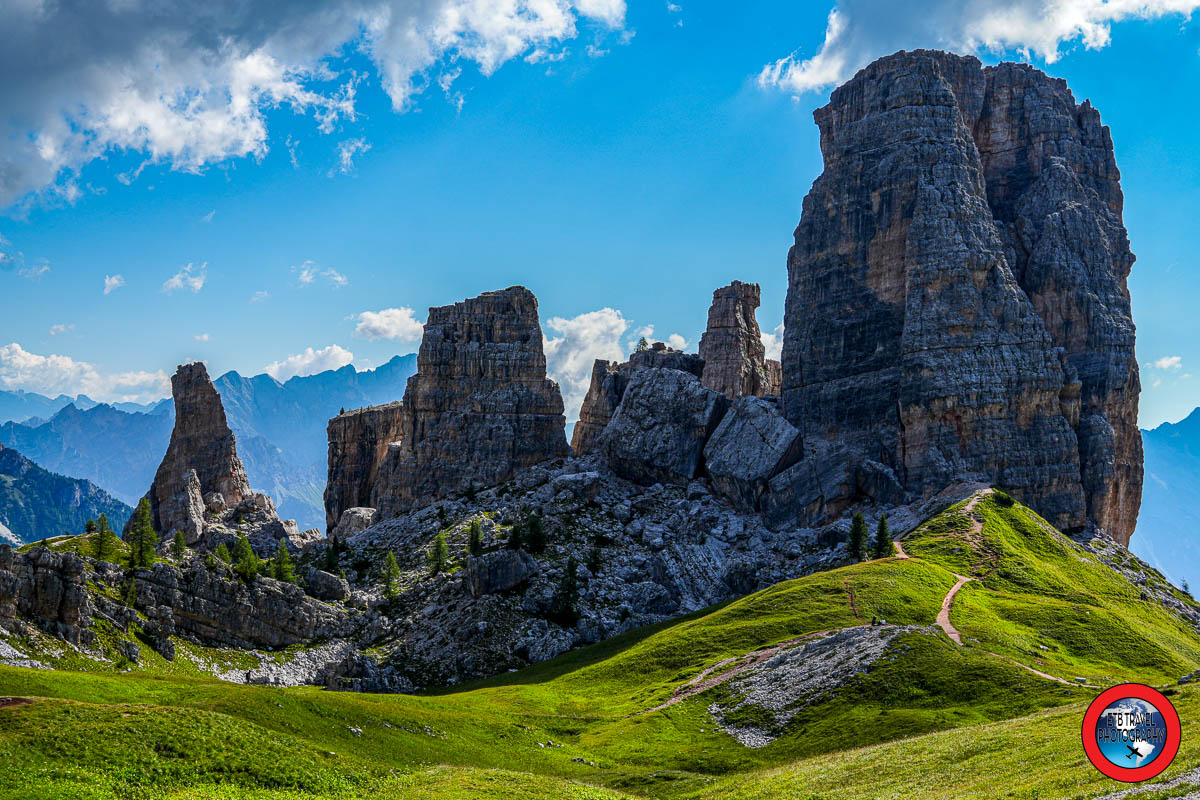
cinque torri

Cinque Torri and Lagazuoi

From San Cassiano, MacsAdventures scheduled us to hike back up the 2,000 feet we had just descended and then hike approximately two more miles to Lagazuoi.  We figured out a better way to Lagazuoi that didn’t require us hiking two of the same miles on such a short overall trek.  We grabbed a taxi to the Gondola!

Actually, we did a lot more than that and truly lucked out with the time constraints we faced.  Though we made one mistake, discussed below, we enjoyed another spectacular day in the Dolomites.

EXPLORE!
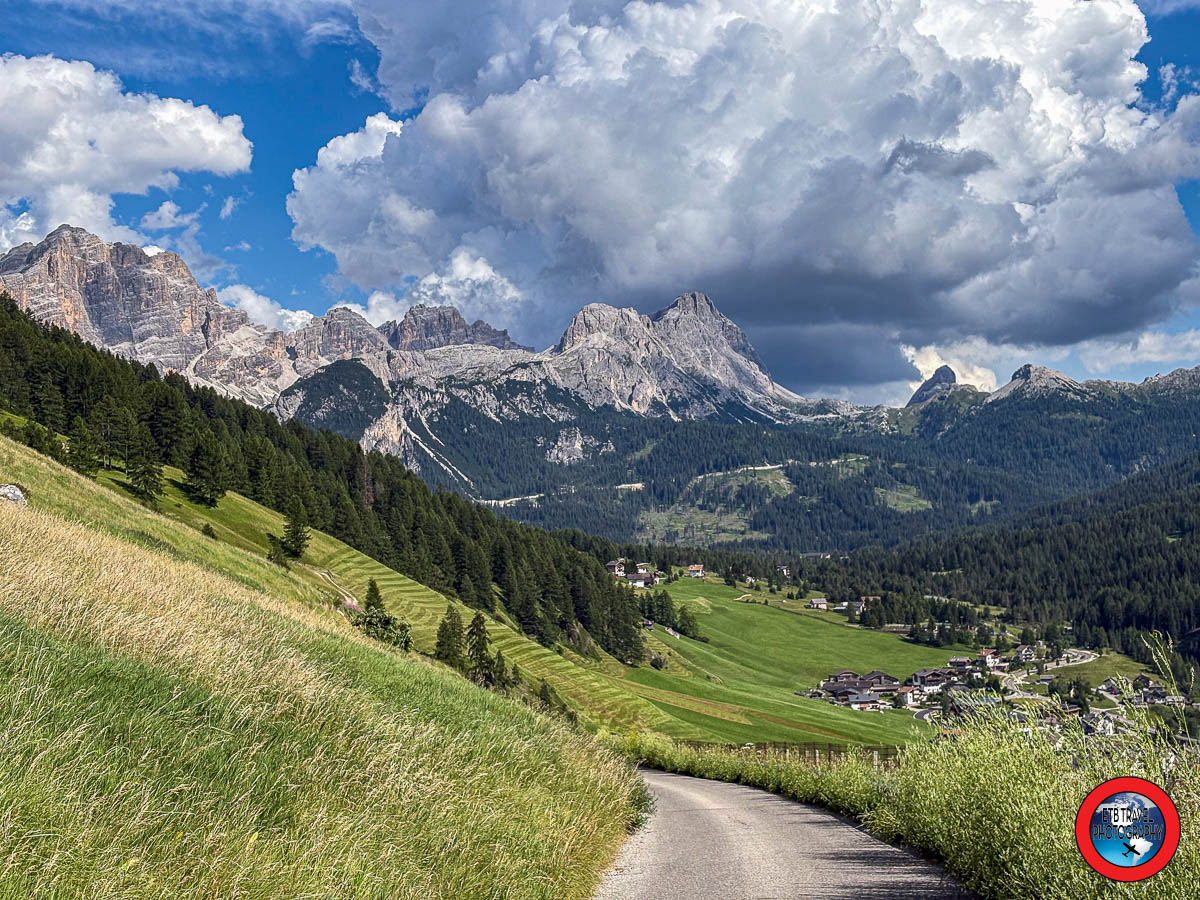
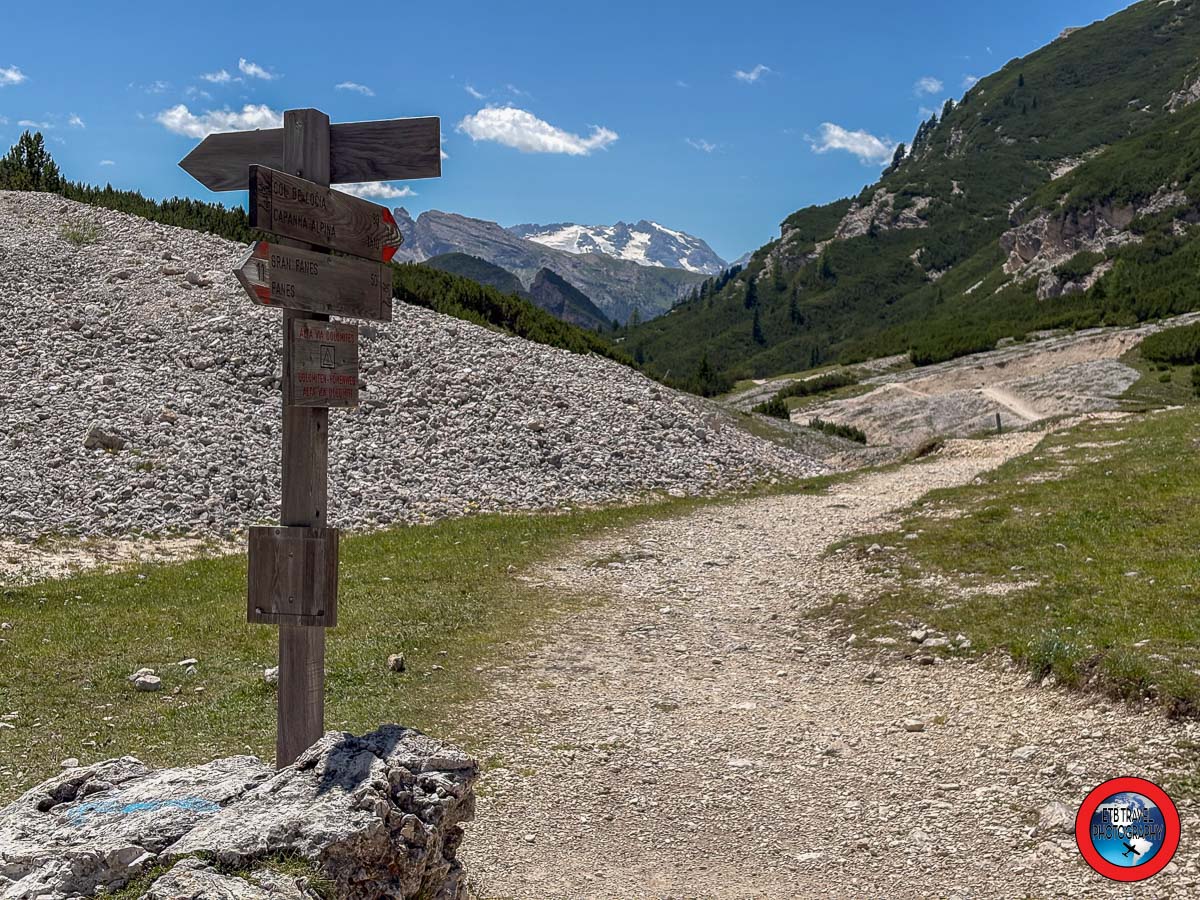
Two Nights in San Cassiano

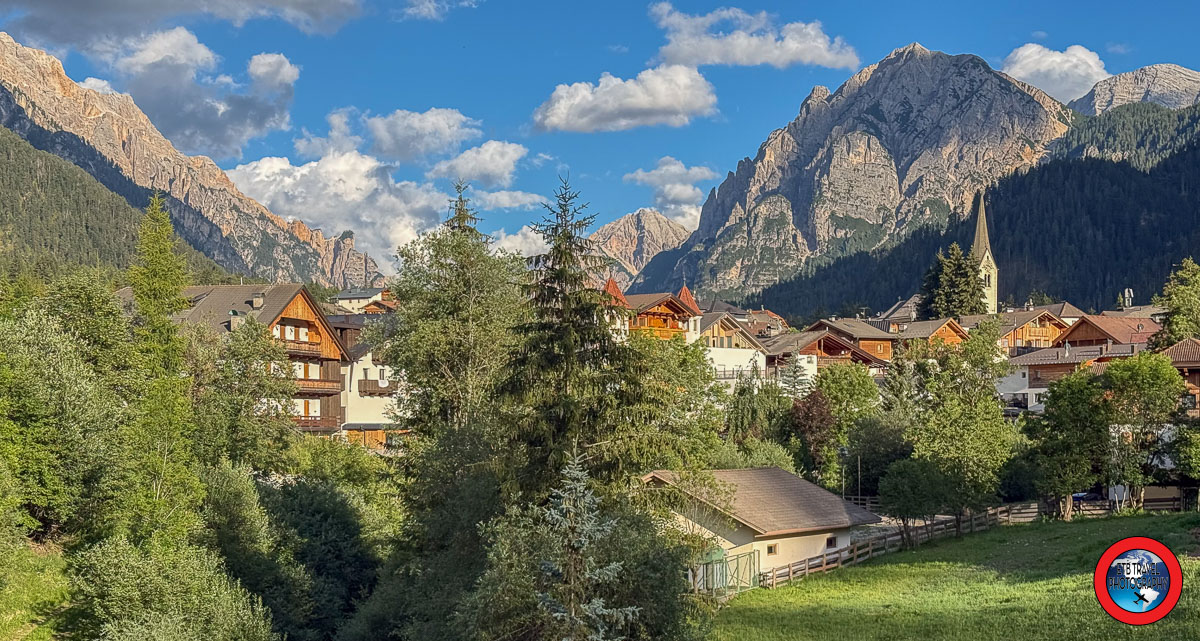
San Cassiano or St. Kassian depending on if you speak Italian or German is a small, upscale mountain village located in the Alta Badia valley of the Italian Dolomites.  Situated at 5,000 feet in South Tyrol, Italy, this quiet alpine town is known for world class skiing, fine dining, and stunning scenery.

At first glance, San Cassiano, only about a ½ mile long with one main street and a few feeders, seems tiny with almost nothing to do.  But if you like the outdoors and take some time to explore the surrounding hills, you’ll find some interesting places and many things to do in San Cassiano.

EXPLORE!
alta via 1 hiking route

Hiking Alta Via 1: Pederu to San Cassiano

Continuing on our hiking journey through the Dolomites in comfort, we took the bus from San Vigilio to Rifugio Pederu which serves as a strategic hub for hikers embarking on the renowned Alta Via 1 trail. Located in Italy’s Fanes-Sennes-Brais Natural Park, the mountain guesthouse was once a military camp and officer barracks for the Austro-Hungarian Imperial Army during World War I. Here we began our 12-mile hike to San Cassiano or St. Kassian.

HAPPY HIKING!
san vigilio

Two Nights in San Vigilio di Marebbe

San Viglio di Marebbe is a small Italian Village in the Dolomites with a population of 1,200 hundred or so.  Though its population routinely triples in the summer in winter as tourists enjoy the outdoor paradise. Tucked away in a UNESCO World Heritage Site, it is best known for preserving its Ladin language, mountain culture, and legendary alpine folklore. Today, it merges its traditional farming traditions with world-class winter sports, making it a premier skiing destination in the Dolomites.

We arrived in San Vigilio on foot after a 10-mile hike from Lago di Braies in July.  For my first hike in the mountains for a few years, my legs were feeling it.  As a result, sightseeing in St. Viglio did not immediately top the list when we stumbled into town around five pm. Instead, in need of getting off my feet, we checked into our hotel, located right across from the church in the middle of town.

EXPLORE!
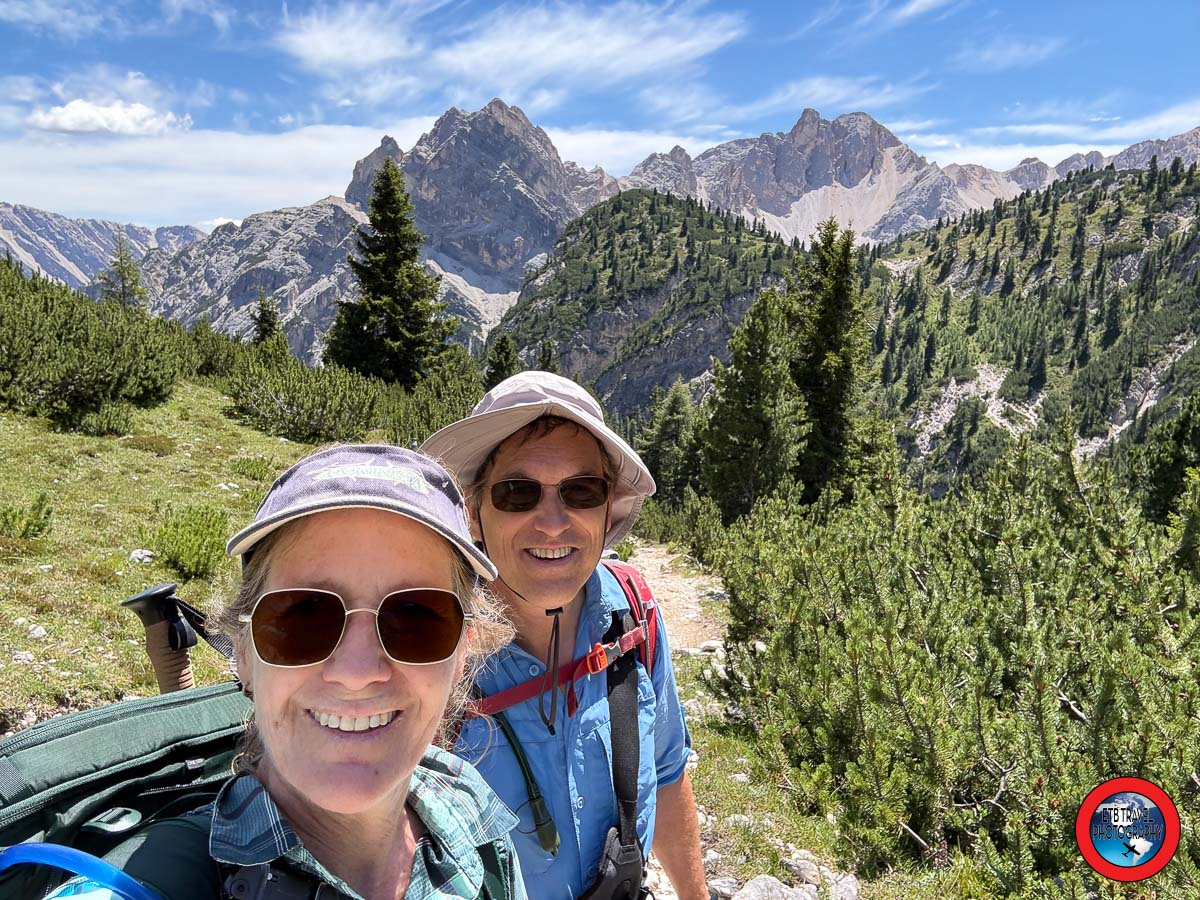
Mike and I in the Dolomites

Alta Via 1 Highlights – Lago di Braies to St. Vigil – Day 1

Alta Via 1 Trek in the Dolomites

The Alta Via 1 is a 75-mile long-distance hiking trail in the Italian Dolomites.  The iconic hut to hut trek takes approximately 8-10 days to complete and begins in Lago di Braies and ends near Belluno.

To hike it during peak season of July and August, you need to book rifugios (the mountain huts) 6-9 months in advance or join a guided tour that already has reservations.  The huts vary in comfort from basic to luxurious.

HAPPY HIKING!

Fonteverde Thermal Spa in San Casciano Dei Bagni

What a lovely way to spend our last day in Tuscany…relaxing!  Today we visited the award-winning Fonteverde Thermal Spa.  Fonteverde was once a renaissance palace for the Grand Duke Ferdinando I de’ Medici.  Now it is a resort which overlooks the Val d’Orcia.  It is set atop a natural hot springs.  Visitors may enjoy the main pool, pay a premium to try additional pools of different temperatures, or select from a variety of treatments.

Most of our group paid extra to pick from a variety of pools, while a few of us hung out in the lower pool.  All pools had waterfalls and fountains which could be used to massage the body.  We arrived early and had most of the peaceful atmosphere to ourselves.

After our visit to the hot springs, we stopped in the nearby town, San Casciano Dei Bagni which owes its existence to the hot springs.  The village which offers lovely views of the countryside is also home to an excellent restaurant, Daniela.  We enjoyed the wonderful weather as we dined on the patio.  Our first course, a saccottino, was superb.  I can’t imagine the number of calories I consumed after digging into this crispy bag filled with potatoes, cheese, and ham and placed in a bowl of cream.  The presentation was fantastic!  Daniela served us a large salad with chicken for the second course…this was a welcome change from the normal foods.  Finally, we spooned pistachio and chocolate gelato into our mouths for dessert.  A diet is coming soon!

After our decadent lunch, we wandered around the small town.  A few ladies spotted some antique jewelry they liked through the window of a store that was closed, but a quick phone call summoned the owner to town within twenty minutes!  While they purchased their wares, a few of us checked out the church, Oratorio di Sant’Antonio and weaved through the back streets.  I love seeing the old walls, doors, windows, flower pots, and light posts.  What a nice day!  ETB


A Day in Florence, Italy

Today we took a roadtrip from Fabro to Florence.  We were fortunate that our drivers could drop us off in Piazza della Repubblica which is centrally located between all the attractions.

The Piazza della Repubblica once served as the City’s main food market, but now is surrounded by nice cafés.  There is also a fun carousel for kids to ride.  We didn’t stay in the piazza long, as we had an agenda; for most people in the group it was shopping.  For me, I just wanted to see the sites.

First, our group headed toward the Duomo or Santa Maria del Fiora to see the City’s tallest and most famous building.  Its dome, designed by Brunelleschi and finished in 1463, was the largest of its time.  Its outer shell is supported by an inner shell.

We visited the inside of the cathedral a little later in day along with a steady line of tourists.  The line flowed quickly and soon, the cathedral cleared out so we could enjoy nice views of the nave and dome.  On the left-hand side of the church was a line to climb up the dome.  Outside the exit, was a line to climb the Campanile.  Had I realized these were options, I might have entered the Cathedral earlier as the crowd was much smaller when we were wandering around the outside upon arrival.

Next to the Duomo is the Baptistry with its distinguished bronze doors, dates back to the 4th century making it one of Florence’s oldest buildings.  The doors were commissioned to Ghiberti in 1401 after he won a competition against leading artists such as Donatello and Brunelleshci.  The panels were so different form Florentine art at the time, that the works are regarded as the beginning of the Renaissance.

From the Duomo we headed over to the leather market at Mercato Centrale, just past San Lorenzo Basilica.  Many of the ladies found purses for $25 and a variety of belts.  I almost got a purse, but of course the one I liked the most cost three times the majority of the handbags on the market.  I later learned, the quality of the $25 purses wasn’t great as the color began flaking off in a day!

I had enough of shopping so I talked Joy into visiting the Basilica di San Lorenzo and the connected Medici Chapels.  We only poked our head inside the Basilica as we entered a side door only for worshipers.  We went around the back, however, and paid the 8 euro entry fee to see the Medici Chapels.

The chapels were built in the 16th and 17th centuries as extensions to the church for the purpose of celebrating the Medicis, both parishioners of the church and Grand Dukes of Tuscany.  The octagonal chapel named Cappella dei Principi (or Chapel of Princes) is a mausoleum.  Tombs of six Medici Grand Dukes are spaced around the walls which are inlaid with semiprecious stone.

A corridor leads from the Cappella dei Principi to the New Sacristy which features statues carved by Michelangelo between 1520 and 1534, including the Madonna and Child. Lorenzo the Magnificent is buried here along with his murdered brother, third son, and grandson.

After visiting the chapels, we met up with the group who found more scarves to buy at a vendor on the edge of Piazza della Repubblica to walk to lunch at I’Cche’ c’e’ c’e’.  The restaurant was absolutely spectacular!  I highly recommend it.  The chef won a competition among several others and was rewarded for recreating Renassiance food.

We began with truffles and lard on toast.  I LOVE truffles, so I was in heaven eating this dish though it was very rich, so only one piece of toast was probably enough.  Next came soup ribollita which was divine.  I may try to recreate this dish.  Our third course was pasta with radicchio.  I couldn’t imagine this would be good, but I was wrong!  The pasta was excellent.  Our main course included meat, potatoes, and greens.  The potatoes were amazing.  Of course we weren’t through yet.  We finished with a fig and apple tart…delicious!  After this feast, we certainly didn’t need dinner!

From lunch we headed to Ponte Vecchio and the Pitti Palace.  Along the way, we stopped at the Piazza della Signoria.  The piazza is popular among the locals and tourists and is filled with statues that commemorate historical events that took place in the city.

Michelangelo’s famous David statue (a copy replaces the original), represents triumph over tyranny.  The Rape of the Sabine Women by Giambologna was carved out of a single block of marble.

After admiring the statues, we continued to Ponte Vecchio, the oldest bridge in the city.  The bridge, constructed in 1345, is the only bridge in Florence to have survived the bombings in World War II.  Once home to blacksmiths, butchers, and tanners who used the river for waste, it now features jewelers and goldsmiths.  I just liked the fact there were vendors in buildings on a bridge!

From the bridge, I wandered over to the Pitti Palace which was originally built for banker Luca Pitti who wanted to out do the Medicis.  Ironically, the building costs bankrupted Pitti, and the Medicis purchased the palace!  Now it exhibits many of the Medici collections and includes the Boboli Gardens.  I had hoped to visit the gardens, but the line to purchase tickets looked about twenty to thirty minutes long which would have only left me about thirty minutes to explore.  While disappointed to miss, just sitting in front of the palace is a nice place to people watch.

Soon we had to return to Piazza dei Repubblica for pick up, but not before we made a quick stop at Il Porcellino to rub its snout to ensure a return trip to Florence!

One place I would have liked to have visited, but didn’t as I ran out of time was Santa Croce where Michelangelo, Galileo and Machiavelli are buried.  They actually have more meaning to me than the Medicis so I probably would have liked it better than the Medici Chapels though the chapels were beautiful.  Had I cut out shopping and shortened lunch by one hour, I suspect I could have seen all the sites mentioned, but I would have been on a march rather than enjoying the company of all the girls.  Florence is wonderful and leaving a few unseen sites will be an excuse to return!  ETB

Shop

Check out the photographic note cards and key chains at my shop.  Each card has a travel story associated with it.  20% of proceeds are donated to charity.

photographic note card, sunset in mississippi
FIRE IN THE SKY
Best Adventure Travel Blog

Tuscan Towns

While staying on the Tuscany/Umbria border, we took day trips to many towns of different sizes.  I think Pienza may have stuck out as my favorite, though each had its own unique qualities and specialties.

Continue reading “Tuscan Towns” →

Scenes at the Villa

We spent most late afternoons and evenings enjoying the villa.  Many trails rain through the nearby hills.  Some trails remained relatively flat and followed a canal while others climbed through the shade of trees past vacant homes being renovated with cash.  Sunflowers and wildflowers we common sites.  When we weren’t walking, we were likely playing tennis, sitting by the pool, cooking, petting the friendly cats or enjoying apertivos and dining.

Morning and Afternoon Walks

Fun, Food, and Friends

Around the House


Culinary Classes in Umbria, Italy

I came to Italy a Sous-chef and left Italy a Master chef!  Just kidding.  I’m neither a chef nor a baker, but with the amount of cooking we did at Il Colombaio, I’m certain I can get around the kitchen a little better now!

Bruschetta

Our first night at the Villa, we learned the Bruschetta making traditions in Italy, as well as how to properly pronounce the name of this tasty appetizer.

In Italy, bruschetta is grilled bread rubbed with garlic and topped with olive oil.  It is also commonly served with hummus or chickpeas, rosemary and cheese.  A third variation may be served with tomato, but this is not the primary way it is served like it is in the USA.

Pizza

In Umbria, pizza is generally made without cheese!  We had a lesson with Antonietta. After she prepared the dough, we each patted a large handful into blobs, let them rise and then hand pressed them into a rectangular pans.

Then different toppings were added to each pan which included just red sauce; just tomatoes and olive oil; onion, olive oil and rosemary; grilled vegetables; and red sauce with chunks of fresh mozzarella.

We probably threw Antonietta for a loop when we wanted to add some meat for protein, but she only spoke Italian, so whatever she thought didn’t get translated to us!

Pasta

Another day…another cooking lesson with Antonietta.  This time we made pasta. Antonietta made a big hole in a pile of flour and started adding eggs for the dough. She kneaded the dough mixture until she felt the right consistency.  Once it reached the correct consistency we rolled it out with a rolling pin.  Antonietta could make a perfect circle.  Ours weren’t quite as picturesque, but Kristi and Diana did a nice job.

With our dough, we made several types of pasta.  First, tortellini!  Antonietta had already made the pork filling (no cheese in tortellini in Italy).  Next, she cut circles of dough for us that we folded in half with filling, wrapped the half circle around our finger, pinched the ends together and then folded over the cap.  It was easier to make than I thought!

Then came crescent shaped ravioli that we closed together with the tongs of our fork. We already had good practice with filling the tortellini, so this was a quick success.

Antonietta continued with cannelloni.  She cut rectangles out of the dough and flash boiled it for ten seconds or less.  Only salt is added to water to boil pasta in Italy…no oil!  Also, the pasta is generally scooped out of the boiling water and is never rinsed. Antonietta scooped the rectangles out of the water.  We patted them dry, added ricotta cheese, and rolled them into a cylinder to make the cannelloni.

After cannelloni, we made tagliatelle.  Tagliare means to cut in Italian.  As such, tagliatelle is hand cut.  It is not run through a pasta cutting machine.  A circle of dough is folded on top of itself from two “sides” if circles have sides, so the result is a long, rectangle of folds.  Then, the dough is sliced thinly, lifted from the middle, and swung into a round cluster.  Antonietta could do this in seconds.  We took minutes! Regardless, it was fun, and it was a tasty dinner.

Crostata

Paola has a special recipe for cherry crostata.  She taught us how to make it.  The secret ingredient was cinnamon.  Once she made the dough, we pressed it into individual pans, added cherry preserves, marked our desserts with a distinguishing deocration, and brought them upstairs to be baked. Guess which one is mine!

Tiramisu

Irma is one of the folks who owns and runs Il Colombaio.  We got to learn from her mother, Anna, how to make Tiramisu.  What surprised me the most was to learn the meaning of Tiramisu…”lift me up” or “pull it up”.  It was served to clients in brothels to invigorate them!  I didn’t know that, but it was fun to hear as we learned how to make the dessert.

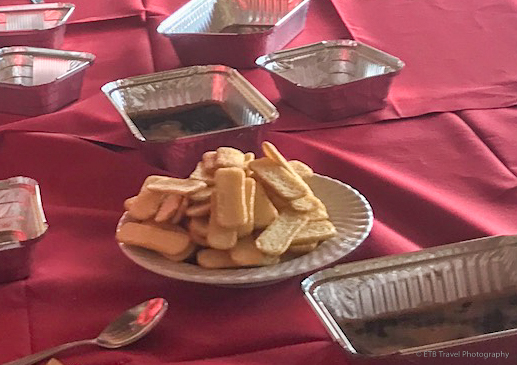
First we made mascrapone cream by hand stirring in the same direction mascarpone, egg yolks and sugar.  Then we carefully folded in stiffened egg whites.  Next we spread a little mascarpone cream on the bottom of the pan.  On top of the cream, we layered lady finger wafers briefly dipped in coffee.  On top of the wafers, we added more cream and a sprinkle of cocoa.  After three layers of lady fingers, we finished off our tiramisu with distinguishing decorations to tell which dessert belong to each person. Because of the meaning of tiramisu, I put lady fingers in a form of penis!  ETB