Day 277 of a Year Long Road Trip Along America’s Scenic Byways
Fort Stevens State Park
I found a campsite last night at Fort Stevens State Park which didn’t make my scenic drives book. The campgrounds were enormous: 550 sites. It was like a small city. Before I left the park this morning, I enjoyed some of the sites; the first being the wreck of the Peter Iredale.
There is nothing special about the wreck of the Peter Iredale. It was simply a ship that had sailed 28 days from Mexico that was bound for Portland to pick up some cargo. Strong winds and rough seas forced it onto the shore where a portion of the ship remains today and has become a popular tourist attraction and hence its fame.
Just inland from the beach is Coffenbury Lake. The tranquil lake, nestled in the trees, is stocked with trout and a popular fishing location for campers. Petey and I took a short walk along its shore before turning north to Astoria.


Astoria Column
Astoria, a bustling seaport, is located where John Jacob Astor’s fur-trading company established a post that became the first permanent European settlement in the Pacific Northwest. At first I was slightly disappointed, but then I drove to the top of Coxcomb Hill to visit the Astoria Column. I’m not sure what I expected; but the Column, 125 feet high and constructed of concrete, was remarkable.
It is one of 12 historical markers erected in the early 1900s between Minnesota and Oregon. The markers were a pet projected of Ralph Budd, president of the Great Northern Railroad. His goal was to salute explorers and early settlers for their contributions. John Jacob Astor’s grandson and the railroad financed the cost of the Column and the thirty acre site. The city prepared the land and access road.
The Column was dedicated in 1926 and cost just over $27,000 to construct. It includes a 164 step staircase which was replaced in 2008 for $600,000! A frieze, over 500 feet long, of 22 significant events that occurred in the region wraps around the exterior of the Column. The Italian Renaissance art form used to decorate the Column is called sgraffito which combines paint and plaster carvings. Italian immigrant artist, Attilo Pusterla depicted scenes such as Indians greeting explorers, the Lewis and Clark expedition reaching the Pacific, and the arrival of the railroad with over 200 brown figures.
The views from Coxcomb Hill which rises 600 feet above the Columbia River were breathtaking. To the north a barge approached the Astoria Bridge that connects Washington to Oregon as fog enshrouded the southern coast of Washington. To the south rivers snaked through the lush green hillsides while low clouds hung above the evergreens. I’m certain the views from the top of the Column, from which visitors may also throw a small wooden glider off the balcony and see where it lands, would have also been spectacular except that a cloud blew in and blanketed the area.
Before leaving and turning south toward Fort Clatsop National Monument, I grabbed a cache hidden to the side of a nearby trail and also logged the Column as a virtual cache. I was just pleasantly surprised by the whole experience.


Fort Clatsop National Monument
Fort Clatsop National Monument marks the location where Lewis and Clark with their crew wintered upon reaching the Pacific Ocean. I visited the rebuilt fort and followed a path to Netul Landing where the expedition came ashore after its journey along the Columbia River. Along the way I stepped over a slug and spotted a bald eagle!
In addition, the path led me past remnants of the logging industry. Poles or pilings, logs from 80 year old Douglas fir trees, are 60 feet in length and are embedded 20 feet into the river bottom. The rows of piling were used during log sorting and raft making processes.


Cannon Beach
From Fort Clatsop National Memorial, we continued south along the coast to Cannon Beach where a 235 foot tall Haystack Rock towers above. The bullet shaped monolith is one of the most photographed sights on the coast…naturally I snapped a few photos myself.


Tillamook Creamery
After a morning outside on a windy, yet glorious day, I reached Tillamook and took a self-guided tour of the cheese factory. Forty pound cheese blocks ride conveyor belts to cutters where the cheese is sliced into two pound loaves. Workers peel a thin layer of cheese off the top and sides of the block which gets dumped into a container for shredding. Thereafter, the two pound loaves are sorted. If the cheese loaf is over two pounds it is shaved. If it weighs less than two pounds a thin layer of cheese is added. The loaves are then packed and sent to the warehouse to age.
The factory includes eight vats of milk. Each vat holds 53,000 pounds of milk. It takes ten pounds of milk to make one pound of cheese. On average, each vat makes
three batches of cheese per day. Over 1.7 million pounds of milk arrive at the plant every day and approximately 167,000 pounds of cheese are processed daily.
There are 120 dairy farms in Tillamook County with around 28,000 cows. The average herd size is 150-200 cows. For every milking cow, the farm generally has a young cow as well. It costs $1,500 to $2,000 each year to feed a milking cow and half that for a non-producer. The average yearly gross income per cow is $3,500. A cow can drink a bathtub full of water per day. It takes two gallons of water to produce one gallon of milk, and a cow can produce six to eight gallons of milk a day (100 glasses). There are approximately 350 squirts of milk in a gallon!
After the self-guided tour I sampled a variety of the cheeses. Tillamook is best known for its medium cheddar, though the line at the ice cream counter made it seem like ice cream was their specialty.


Cape Meares State Park
Back on the coast, I stopped at Cape Meares State Park located at the northern part of Three Capes Scenic Loop. Cape Meares is home to a hundred year old light-house which offers magnificent views of the rock coast and the Octopus Tree. The Sitka spruce, which can be reached by taking a short trail through the forest, has no central trunk, but instead six limbs which extend horizontally from the base as much as 16 feet before turning upward. It is 105 feet tall and between 250-300 years old. It is unknown whether forces of nature shaped the tree or if Native Americans played a part in its formation.


Cape Kiwanda State Park
I tried visiting the second cape along the loop road, Cape Lookout, but after a handful of detours, I threw in the towel and moved onto Cape Kiwanda State Park. The park is known for its red and yellow sandstone cliffs. Photographers enjoy capturing the colors on SD cards while hang-gliding enthusiasts enjoy launching off its dunes.
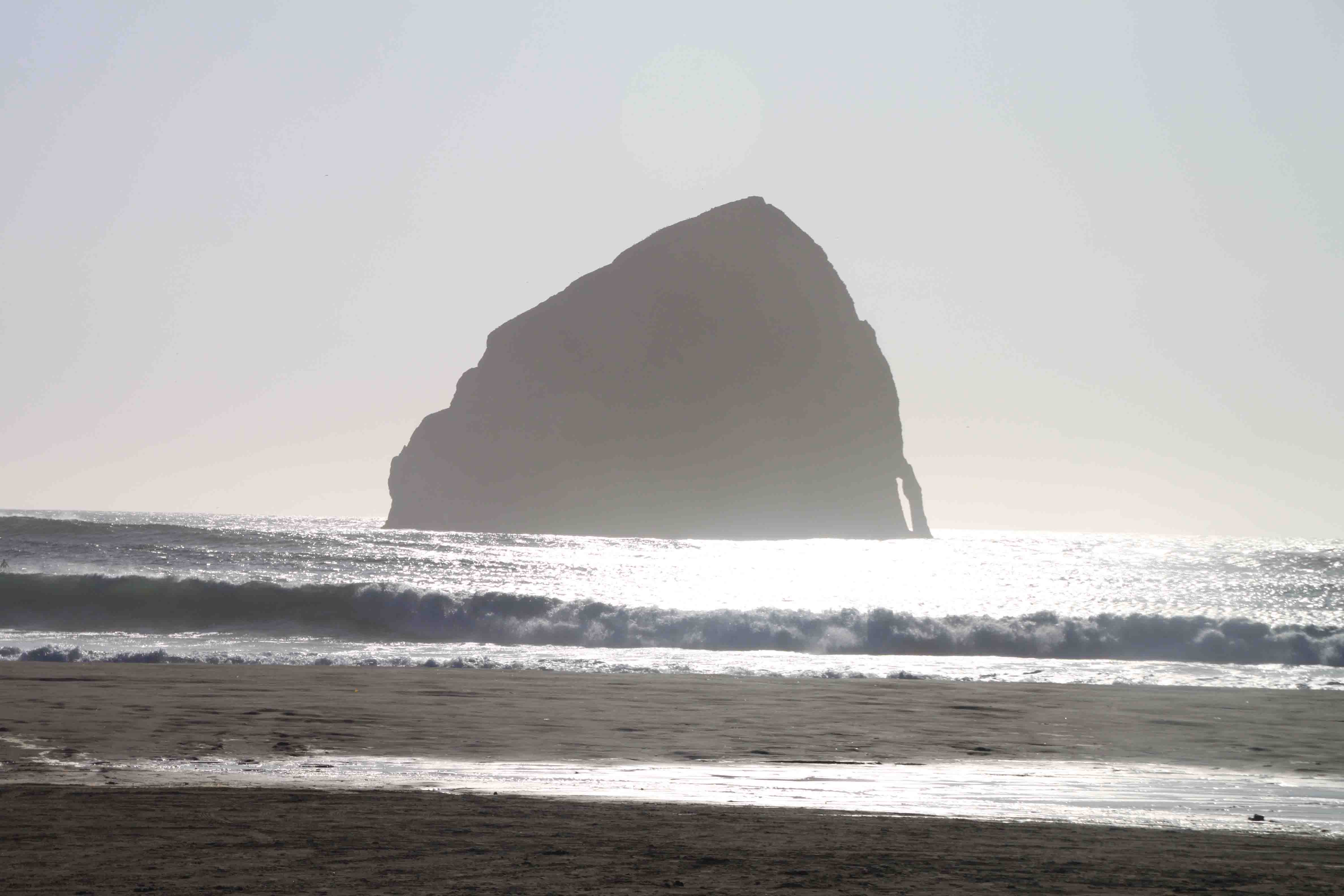
I have to admit I was disappointed in the cliffs. I must have arrived too late in the day, as it was a bit shadowy, but the crashing waves were a joy for the countless surfers. The enormous rock guarding the harbor with the sun shining through a small opening was somewhat cool, however.

D River
Continuing south on Highway 101, I reached Lincoln City, home to the shortest river in the world. D River flows 120 feet from Devils Lake into the Pacific Ocean. After a quick visit, we moved on to Depoe Bay, the world’s smallest navigable harbor, only six acres.


We followed the coast all the way to Newport before turning inland and traveling through the wine country on our way back to Portland. It was a long, yet wonderful day! ETB
Map of My Road Trip Across the USA
Learn more about my road trip across the USA, or click the link below for the interactive map.

Other Articles About Oregon You May Like
Like It? Pin It!


What a day! It’s funny how we take things for granted, like cheese. How interesting is that!!! And the octopus tree! Your post was excellent and I loved the pictures.
Wow! What a great post!
Sounds like you had a thoroughly enjoyable, as well as interesting day!
I would have loved to have nibbled on the fresh cheese! Yum!
So glad you had such a great day!
xo’s M
yummy cheese