
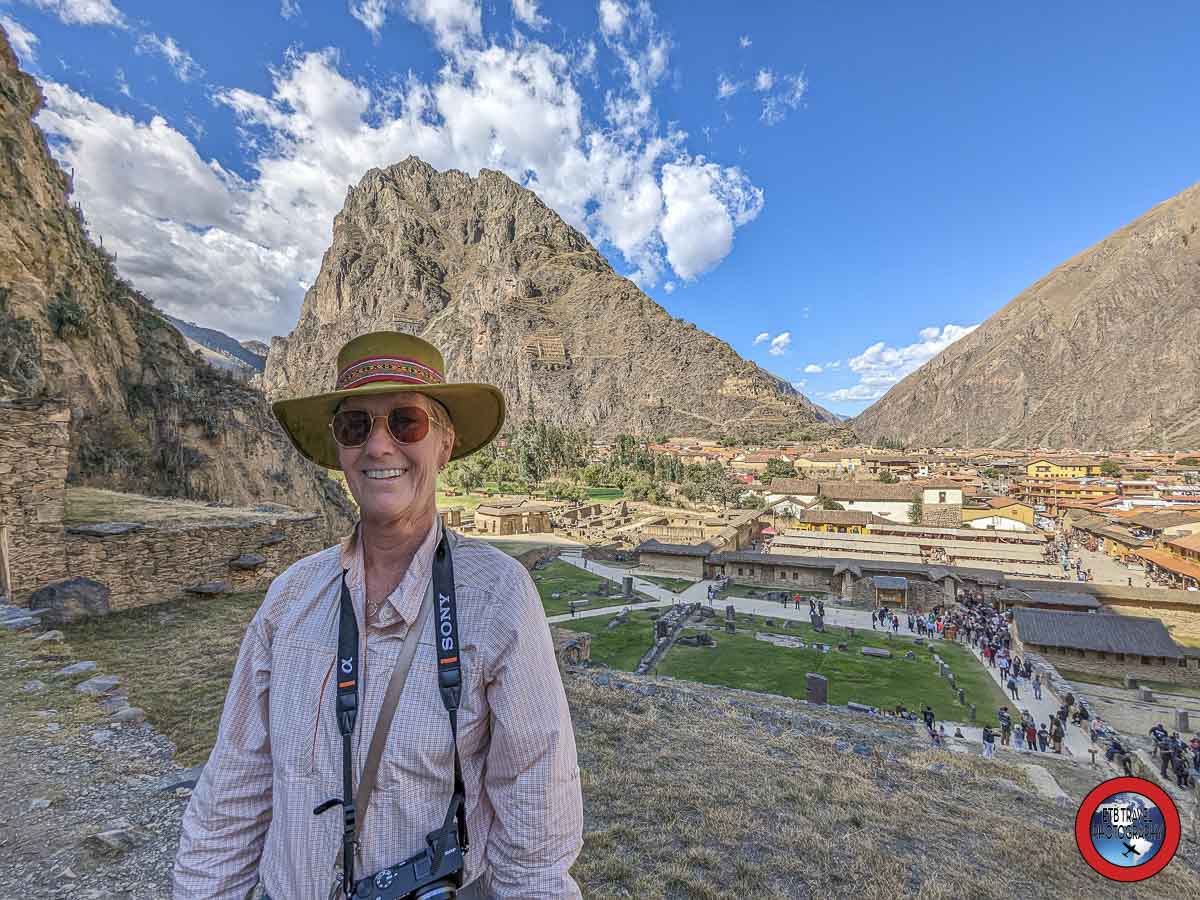
The last time I visited Peru was in 2009 to hike to Machu Picchu. In typical American fashion, I had limited vacation. As a result, I only had time to do the amazing Salkantay trek with Mountain Lodges of Peru, but had to skip the Sacred Valley as well as many other attractions near Cusco.
While I don’t generally return to the same places because there is too much to discover in the world, I returned to Cusco to see Rainbow Mountain (which was covered in ice in 2009) and tacked on a few other tours in the area. The first being, the Sacred Valley.
I was worried about tours filling up in the summer, so I prebooked everything with Salktantay Trekking. This was unnecessary. I wouldn’t be surprised if there were 100 different tour companies lining Cusco’s Plaza Mayor and surrounding cobblestone streets. As long as you have a few days of flexibility, it is easy to book day tours on arrival. Cusco has really exploded with tourism over the last 15 years!

Table of Contents
Tours of the Sacred Valley
But if you don’t want to waste your time in a tour company office, Salkantay Trekking has a very informative website, allbeit highly overpriced tours! Many similar tours of the Sacred Valley were 1/3 of the price. That said, our guide Rolando was good, and the van seated our small, enjoyable group comfortably. Additionally, the company provides snacks and water, though not $50 worth, the difference in price!
The typical tours of the Sacred Valley include visiting three ruins, a buffet lunch, and a cultural experience such as weaving, alpaca feeding, or alcohol tasting. The three ruins are Chinchero, Ollantaytambo, and Pisac. Most tours visit the ruins in this order. Salkantay Trekking, however, followed the driving loop counter-clockwise and took us to Pisac first and Chinchero last.
As a result, with the exception of Ollantaytambo, we avoided most of the crowds. I give the tour company 5 stars for that move! We were even the first to lunch in Urubamba. Given the restaurant catered to hundreds of tourists, I was happy to go through the buffet line first to avoid the germs! Before I move on to the ruins, I will say the extensive buffet could accommodate any dietary restrictions.

On the Way to Pisac
As mentioned, with Salktantay Trekking, we headed out toward Pisac first thing in the morning. The company reaches out via Whats App to provide individual pickup times and answer any questions the prior evening.
After about a twenty-minute drive up a winding road, we made a surprise stop at Manos de la Communidad. The center affords visitors the opportunity to feed alpacas, to see condors, to admire the weaving culture, and to shop for jewelry and other nice products. Other tours visit Awana Cancha Alpaca Farm.
Since I have already stayed at an Alpaca Farm in Oregon while on my year long trip across the USA and again while visiting Red Lodge, Montana, I was more intrigued by the condors. They were massive! It sure would be cool to see them in the wild.
The surprise visit was nice, and it broke up the drive which would have taken 1.5 hours to Pisac, though I would have liked more times at the ruins. We finally arrived at Pisac Archaeological Park around 10 am.

Tourist Ticket
Here we purchased our tickets. If you plan on spending a few days around Cusco and the Sacred Valley, it is best to purchase the Boleto Turistico (tourist ticket). It provides entry to 16 different sites, and if you visit three locations, it pays for itself. Additionally, the comprehensive pass works for ten days. While it includes many interesting sites, unfortunately it excludes the cathedrals in Cusco. Be sure you have soles, Peru’s currency, that’s all they take.

Pisac
After a stop at the ticket booth, we passed by many vendors selling souvenirs and entered the site. Pisac Archaeological Park is a large Incan complex situated at 11,500 feet along a mountain ridge overlooking the town of Pisac and the Sacred Valley.
The complex of agricultural terraces, residences, watch towers and a religious center is believed to be constructed by Inca emperor Pachacuti no earlier than 1440. Some researchers believe it was constructed to protect the southern border of the Sacred Valley, but the Incas never retreated here to defend their empire from the Spaniards.
Other scholars believe Pisac served as a royal retreat where Pachacuti and nobility could relax in between military campaigns, undertake religious ceremonies, and commemorate victories over the Cuyos, a group who conspired to kill the Incan ruler.
After a brief question and answer session with Rolando, we were given twenty minutes to explore the remaining buildings, terraces, and water features. I rushed around taking photos, admiring the view, and peering at the holes in the hillside which were once tombs.


Lunch in Urubamba in the Sacred Valley
From Pisac Archaeological Park, we ventured north toward Urubamba. We made a roadside stop to enjoy the magnificent view of the Sacred Valley and Town of Pisac. While we were scheduled to visit the town, our group agreed to skip market and to spend more time at the other sites.
As result, we ended up at Don Angel Inka Casona Restaurant locked behind a guarded gate in Urubamba at 12:15 and we were the first of hundreds to enter the buffet line. The buffet featured hot and cold dishes, meat, fish, chicken, salads, fruit, vegetables, dessert, and more. The extensive selection spanned many tables!
Ollantaytambo
After lunch, we continued north to Ollantaytambo which is the name of the bustling village of 3,000 and the archaeological site. The town is located at 9,162 feet along the Patakancha River.
Our driver dropped us off at the square lined with restaurants and lodging. We followed our guide down the road, around the construction, and across the river to the entrance to the Incan site which is behind a market of souvenirs.
This large complex was swarming with tourists. We formed a single file line and climbed the terraces of Temple Hill with the masses. The terraces are cut between two outcroppings, and it looks more like a fortress than a religious site.
Along with Pisac, the town of Ollantaytambo and its religious center was constructed by Emperor Pachacuti as part of his royal estate. It later served as a temporary capital for Manco Inca during the Spanish conquest of Peru, and in 1536 Manco Inca defeated the Spanish in the Battle of Ollantaytambo.


Tucked within the rock outcropping and providing panoramic views of the town, the Sacred Valley, and the distant quarry from which the rocks were carved to make Temple Hill, Ollantaytambo seems like an imposing and secure structure. But Manco Inca felt otherwise and withdrew to the heavily forested site of Vilcabamba the following year.
To me, the most fascinating thing to see about these complexes are the enormous carved stones. They aren’t just a four-sided rectangle. They are different shapes and joined together almost perfectly without mortar. Their precise masonry provides stability, special acoustics, and even indicate summer solstice and the time of day depending on their location. Additionally, the stones are several feet thick so just moving them from the quarry along their network of roads and ramps is a feat!
Ollantaytambo is really magnificent, and if you have time to explore the Sacred Valley on your own rather than through a quick day tour, plan to spend a day in town and at the archaeological site as there are additional trails to hike at the ruins.
Chinchero
For our final stop in our day tour of the Sacred Valley, we visited Chinchero, another small town with Incan ruins. Located at 12,343 feet, it is cold and windy even on a sunny, summer day. At least it was when we visited the quiet town. Since our tour went in the opposite direction as many of the others, we had Chinchero to ourselves.
As with Pisac and Ollantaytambo, Chinchero also served a country resort for nobility, this time Inca Tupac Yupanqui, the son of Pachacuti. The site features many aqueducts and terraces for farming and agricultural purposes.
The fertile soil of Chinchero along with the cool temperatures provide excellent conditions to grow potatoes, quinoa, fava beans, and more. Potatoes are still grown today and a local showed us a few types of the 3,000 varieties grown in Peru.
They freeze the potatoes for three days, squeeze out the liquid and then peel and dry them. They are ground for flour or rehydrated. We saw the potatoes spread across the terraces, drying in the sun during our visit.
Of course, Chinchero also features the Inca stonework and a church built by the Spanish in 1607. The colonial church stands upon the remains of the Incan palace. It’s walls and ceiling are painted in Catholic and traditional motifs.


In all, it was a great day touring Sacred Valley, though we spent about as much time driving as visiting the sites, so if you have more time in Cusco, it is worth taking it slowly. The landscape alone is worthy of a scenic drive. ETB
Travel Tips for the Sacred Valley
– Buy a tourist ticket
– No need to book a day tour more that a few weeks in advance
– Bring soles, the local currency
– If you have time to explore on your own, plan for a few days and as you drive along the winding roads
and through the small towns, be on the lookout for sticks with red flags which indicate a place to grab a local Chicha beer!


This is a bucket list item for me. Loved your post! 🙂
It’s worth it!
What an incredible post, and your photos are beautiful. Thanks for all the helpful tips, like Meg below – this is bucketlist for me one day 🙂
You’ll love it!!
Your photos are stunning! Reminding me that we need to prioritize this on our travel list.