
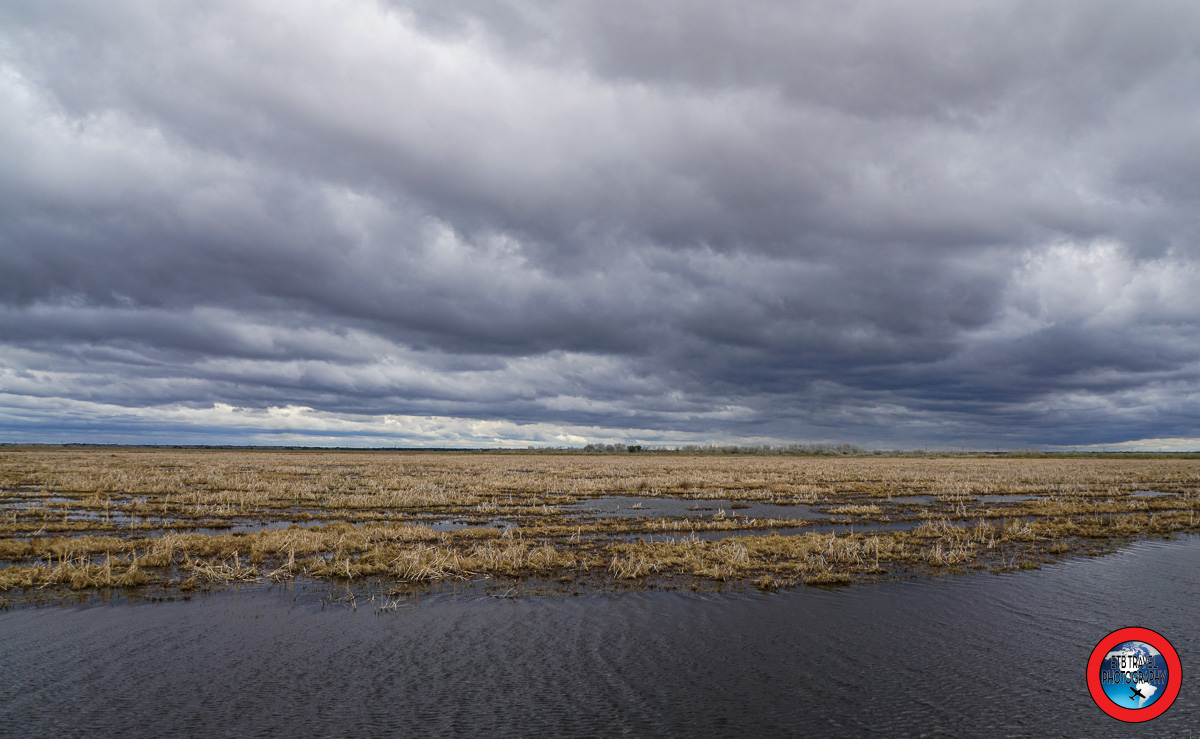
While visiting Katy for two weeks of horse shows, I had a day off between the events and took a short road trip to San Bernard National Wildlife Refuge.
Established in 1968, the refuge encompasses 70,000 acres from the coast to 50 miles inland. It protects coastal prairies, lakes and marshes (both fresh and salt), as well as riparian and bottomland forests that attract 320 species of birds.
While it is recognized internationally as a Significant Shorebird Site along with nearby the Brazoria and Big Boggy refuges, San Bernard National Wildlife Refuges is home to much more wildlife including deer and alligators.

I visited the refuge with low expectations due to windy and wet conditions but was pleasantly surprised to find five short trails. With wildlife refuges geared toward protection, many times there are limited hiking trails, especially dog friendly ones. So, with lots of places to explore, today was my dog Annie’s lucky day!
Getting to San Bernard National Wildlife Refuge
After a 1.5 hour drive from Houston, we arrived at San Bernard National Wildlife Refuge around 8 am. Google maps wants visitors to turn into the headquarters, but follow the posted signs for the main entrance.
Following the long dirt road through the miles of prairies makes it feel like you are going to the middle of nowhere, but rest assured there is an entrance to the left with a map of the refuge, including an auto tour route.
As we drove into the San Bernard National Wildlife Refuge, Annie perked up, staring out the window as she trembled. That’s her sign for cows or deer. Sure enough was spotted three bucks and later three does. Much to her dismay, she did not get to chase them.

Hiking in San Bernard National Wildlife Refuge
Instead, we stopped at the first trail to the right, called Bobcat Woods. Bobcat Woods Trail is equipped with the only pit toilets in the refuge and a small dirt parking area.
Bobcat Woods Trail
The 1.5-mile track begins at an old cattle chute and then follows boardwalk through the woods and across a cement path to a viewing platform. Two levies provide opportunities to wander across the swampy area home to several birds and alligators. It was too cold to spot any alligators, but birders would have enjoyed seeing the coots.


Cedar Lake Creek Trail
At the end of the main road, you will find the 0.75 mile Cedar Lake Creek Trail. The trailhead is next to a boat launch and fishing pier. Today the creek was running and the trail, which follows the banks was a soggy mess.
Scissor-tailed Trail
As a result, we backtracked and found the Scissor-tailed Trail which is a 0.8 mile loop path through the woods. The trailhead is located just before the second low water crossing which was passable with standing water in VANgo because it was paved. When I visited, there was a giant pile of rocks and a 50-pound bag of carrots at the trailhead! I kind of wanted the carrots for my horse!
In the clockwise direction, this short grassy trail was a little sloppy in areas, but mostly dry until we reached the end where standing water filled the path. While I tried side-stepping the damp conditions, Annie splashed through the slush as buzzards glided overhead.

Auto Tour at San Bernard National Wildlife Refuge
After this hike, we completed the auto tour which took us in a loop past the Cow Trap Marsh Trail, Moccasin Lake, and Rail Pond before depositing us out by the headquarters. Ducks floated in the waters and other birds flitted from place to place.

San Bernard Oak – 2nd Largest Live Oak in Texas
Before we left the refuge, we took the advice of a mountain biker that rides the roads to visit the San Bernard Oak Trail. To reach this trail, you pass the main entrance continue through the prairies until you see a turn to the right on a dirt road.
The San Bernard Oak Trail was muddy at best and submerged in ankle-deep water at worst. Normally, I would have skipped hiking a trail in this condition, but it leads to the second oldest oak tree in Texas. I couldn’t miss that. The 1.5 mile out-and-back, interpretive trail is a combination of mowed path and boardwalk.


It passes through wetlands lined with palmettos and shaded by moss and fern covered oak trees. A bench sits at the end of the swampy trail for viewing the San Bernard Oak, estimated to be between 200 to 300 years old. Its circumference measures 386 inches, and it stands 67 feet high. The special tree earned the Texas State Championship in 2003 and is one of the largest trees in the United States.

I would have easily overlooked the trail if the friendly local hadn’t mentioned it, as the tree is not located within the main entrance of San Bernard National Wildlife Refuge, so be sure to check the map.
Tips for Visiting San Bernard National Wildlife Refuge
Fortunately, this cold and windy day didn’t require bug spray, but waterproof shoes are a good choice if it has rained within the last week. And of course, on a nice spring day, prepare for mosquitos.
Overall, I was pleasantly surprised by the San Bernard Wildlife Refuge. Normally, I do not enjoy wet, muddy trails, but I suppose I haven’t been out hiking beyond my daily hikes on the Northshore Trail when I am home in Flower Mound. So, it was nice to get out in nature. I think I will need to slip in a hiking trip this spring between all the horse shows! And for the summer, look out Canada…here I come. ETB
Pin It


What a beautiful area to hike around- I love those tall, twisted, moss covered trees! 🙂
Yes, they were pretty!
Looks like a lovely spot to explore. Glad to hear the trails exceeded your expectations. The San Bernard Oak looks gorgeous! We’re thinking of visiting Texas this fall and will have to keep this in mind.
If I had recently been hiking in Canada, it probably wouldn’t have exceeded any expectations, but it was nice to get out in nature. I recommend the hill country when visiting Texas. It is the best area!