During my stay in Cusco, I toured Rainbow Mountain, the Sacred Valley, and Moray and the Salt Mines of Maras. All of them were very special places to visit, and I’m glad I made time to see each place, that I did not do during my visit 15 years ago to hike Machu Picchu.
As I’ve mentioned in previous blog posts there are several different companies offering the same tours, typically with a small twist. Despite almost identical visits, the prices vary. One of the most budget friendly tour companies, popular with a younger crowd, is Machu Picchu Reservations.
The prices were so low that I was hesitant to reserve any tours online with this company in advance of my arrival. But once I landed in Cusco and all my plans were derailed due to illness, I was glad to be able to make some last-minute bookings with them, especially when I realized the tours didn’t differ much.

Table of Contents
Chinchero
Our tour began at 8:30 from their office where we loaded into a white van. The driver and guide took us to Moray via Chinchero where we made a stop at a textile market. Chinchero is known for their weaving, and there were a plethora of companies that provided demonstrations on making and dying yarn to weave their colorful products.
They use many natural substances to produce the colors, including 22 different reds. Blue was the hardest to make. It requires fermenting something in baby urine. Now I’m not so sure blue is my favorite color! After the demonstration, we had a chance to buy hats, scarves, gloves, sweaters, and many other items before we continued to Moray.


Moray
Moray is a famous Inca ruin located on a high-altitude plateau northwest of Cusco. It consists of three circular terraces (muyus) with twelve levels each. From the top to the bottom of each depression is 490 feet.
It is believed the muyus were used for agricultural experiments. With a 27 degree temperature swing from top to bottom, each terrace was its own microclimate, as the sun hit them at different angles and intensities.
In addition, to the different terrace heights, the Incas constructed an irrigation system which brought water from a high-altitude reservoir in a series of channels to the terraces. Additionally, different soils and even guano were used to study what conditions were best for cultivating crops.
The Incas farmed potatoes, corn, and quinoa, though in Moray they experimented mostly with corn and provided offerings to the gods for fertile earth.


We spent about 45 minutes to an hour at the site strolling the path that descends down to the largest depression and back up to the two smaller ones. Interestingly, no site is fully excavated so that archaeologists know what was the original condition. Somehow, I never knew that.
Something else that truly fascinated me was to imagine an experimental, outdoor greenhouse at 11,500 feet. After all my time in the Rockies, it is hard to believe anything but tundra could grow at such a high altitude.
Salt Mines of Maras
After our visit to Moray, we continued our tour at the Salt Mines of Maras, but not before stopping in a salt and chocolate shop. Their chocolates were amazing, and I couldn’t resist buying a bag of their famous salt despite still having a bag from the Wielizska Salt Mines in Poland!
The Salt Mines of Maras were truly fascinating. I must have an obsession with salt flats, ponds, and mines. Whether is be the Bonneville Salt Flats in Utah, the Salt Flats in Death Valley, or the Salt Mine of Maras, I’ve never been disappointed. One day I will have to go to Bolivia.
History of the Salt Mines of Maras
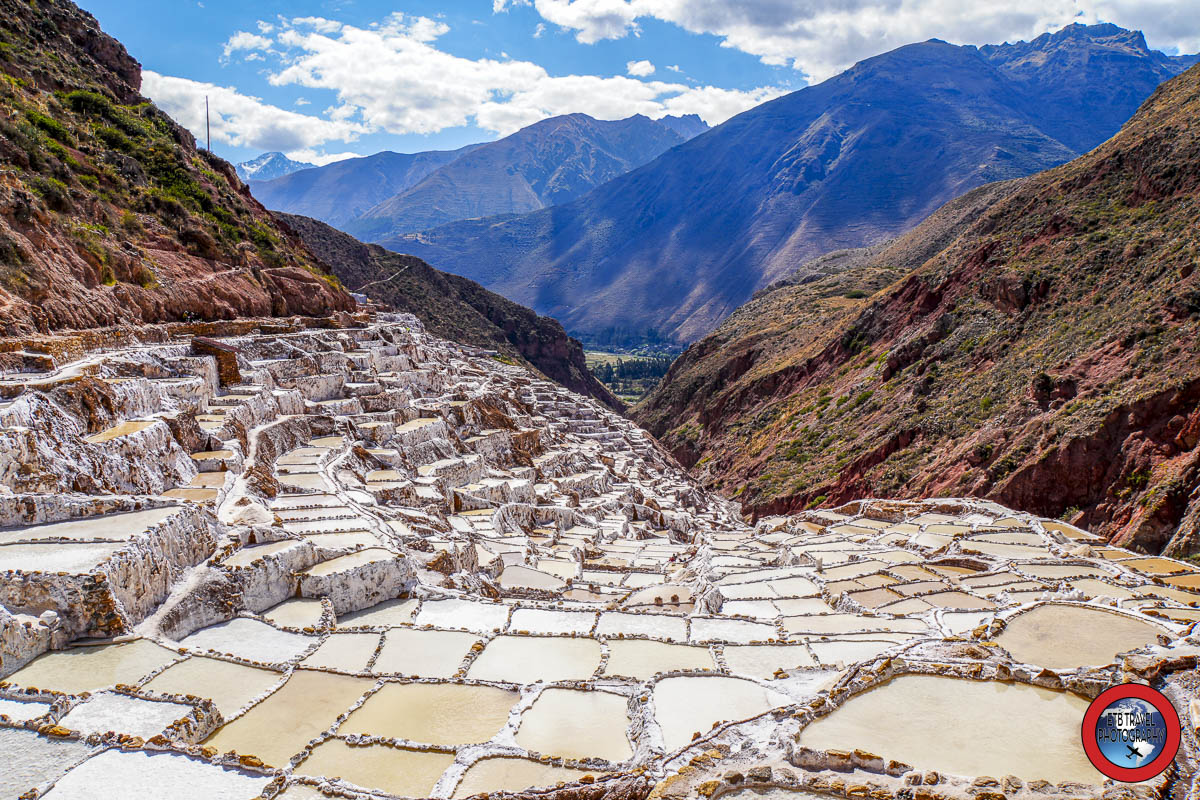
The salt ponds in Maras are a site to see! Over 5,000 pools of varying colors of white to brown are clustered together on the side of a mountain. While the small pools are man-made, the salty waters come from an underground spring.
The pools that date to pre-Inca times are now owned by individual families from the area and produce three types of salt. Along with table salt and Epsom salt, the Maras pools produce pink salt for which it is famous. The pink salt is special because it contains additional minerals from the underground spring. It rivals Himalayan salt.


The locals harvest their salt pool and deposit their daily production with Marasal, a large salt company which packages and distributes the product. The profits are given to the families. We saw one family harvesting their salt. All I could think of is how hard it would be just to get to their individual pool, much less harvesting the salt and carrying the heavy bags up the mountainside! The whole process is quite remarkable.
From the salt crystals forming on top of the water, to the varying shades of the pools, to the shapes of the pools on the mountainside, it was a photographer’s paradise. Especially with the magnificent landscape surrounding it. I could hardly soak it all in during our 30-minute visit.

In all, I really enjoyed this tour to Moray and the Salt Mines, despite spending more time driving than at the actual sites. At least the drive through the mountains is quite lovely too. ETB
Like It? Pin It


Excellent reading, notes made for our planned tour of Peru next year
So interesting to read on these salt mines! Great tour
Such an incredible place, and what a setting!!