Our third day in the Amazon began at the confluence of the three rivers, Marañon, Ucayali, and Amazon just a few miles from Nauta and on the border of Pacaya-Samiria National Reserve.
The Amazon River and Its Tributaries
The Ucayali is the main headwaters of the Peruvian Amazon and when it meets with the Marañon, it becomes the Amazon. Originating in the Andes not far from Cusco, the popular tourist destination for visiting Machu Picchu, the Ucayali travels 994 miles before it reaches the confluence next to Pacaya-Samiria National Reserve.
The Amazon, with its 1,100 tributaries, is the largest river in the world by volume and the first or second longest in the world (disputed with the Nile). The massive river was initially known to Europeans as the Marañon and later became known as the Rio Amazones in Spanish and Portuguese.
At the confluence, the waters of the rivers are two different colors. The Amazon, full of sediment, is a milk chocolate color while many of the tannin filled tributaries are black and lack sediment and nutrients. Accordingly, settlements in the Amazonian Jungle are found near the sediment filled water and fishing takes place in the blackwater.

Table of Contents
Pin It For Later
Pacaya-Samiria National Reserve
There are 96 settlements in the Pacaya-Samiria National Reserve, and that is why it is called a reserve, not a park. Encompassing 8,000 square miles, the reserve is twice the size of Yellowstone National Park and bigger than Massachusetts!
Puerto Prado and the Largest Waterlily in the World
Our first stop of the day, after a brief skiff ride, was in Puerto Prado to see the Victoria Amazonica. The world’s largest waterlily is named for Queen Victoria as it may be seen in the Kew Gardens in England. The lily pads can grow up to 10.5 feet wide and support the weight of a small child!
After a short walk, we reached a somewhat dried up pond with some waterlilies that looked like they were struggling for life. They were hardly 10.5 feet wide, but they did support the weight of a Jacana. I felt a little disappointed after all the hype, especially since I had seen prettier ones while visiting Beijing. But we were now entering the Amazonian winter, so perhaps June wasn’t the right season?


Along with learning about the world’s largest water plant, we also learned about termites. In the Amazon, they build their nests in trees to keep from being flooded. While they are not welcome pests in our modern world of buildings, they are used as an insect repellent in the Amazon. When squashed they emit a chemical which deters mosquitos! Who knew?
All you need is a machete to open the nest. In fact, all you need in the Amazon to survive is a machete, salt, and knowledge. The rainforest provides the rest. But I digress.
History of Nauta City
As with visiting Vista Allegre yesterday, we had the opportunity to purchase some trinkets before we motored up the Marañon River to Nauta City. Nauta City was founded in 1830 by Manuel Pacaya-Samiria, and is considered the oldest, official settlement in the region.
Pacaya-Samiria, leader of the Kokomo people, was tired of the treatment they received in the Jesuit mission La Laguna (now Lagunas). After the 1830 uprising, he along with his men constructed a raft and navigated the Ucayali River for days before they settled just a few miles from the confluence of the Marañon.
Upon clearing the area, they found a large pot, known in their language as Mauta, and wished to name their new community Mauta after the jar. However, in the process of communicating with authorities, the word was changed to Nauta, meaning navigation.
Nauta Today
Today, Nauta is a city of 34,000 inhabitants and is the gateway for lodge-based excursions up the Marañon River in the Peruvian Amazon. We were greeted with open arms when we arrived. Locals literally grabbed our arms and hands, supporting us while we climbed up the makeshift stairs on the steep, sandy shore. At first I wondered why they didn’t have better stairs, but then I remembered the shores erode.
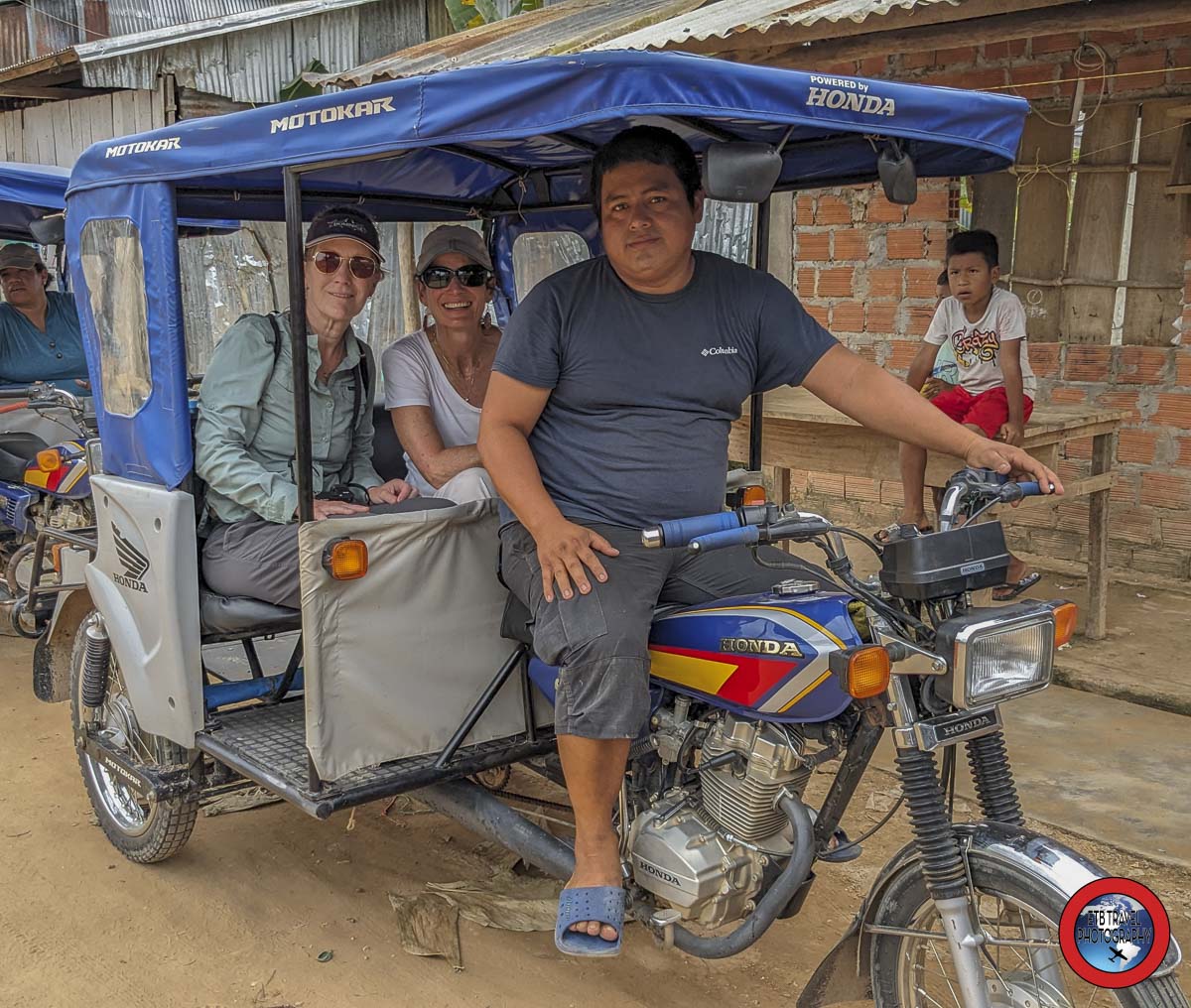
Nauta was bustling and fit the bill for a typical third world city. Motorcycles and tuk tuks zipped along intermittent paved and dirt roads. They were certainly the primary form of transportation with gas being $1.19 per liter. Open air shops offered countless kinds of corn. Power lines draped overhead. And vendors sold food from their carts on the corners.
Its run down square featured a statue of its founder as well as its name, as with many towns in Mexico. A mural that explains the history of Nauta from escaping the Jesuits, to suffering illnesses brought by westerners, and coming back in the after life as a jaguar, spans two sides of a corner building.


Sapi Sapi Lake and Paiche
After a short time wandering around town, we walked to Sapi Sapi Lake, a small pond home to giant arapaima fish also known as Paiche. The Paiche is the largest freshwater fish in the Amazon, and possibly the world. They have been around for 13 million years and can grow up to 15 feet!

The ones we saw weren’t that big, but it was still fun to feed them some bread while we met some local youngsters studying to be in the tourism industry. They practiced their English on us which didn’t come close to our guides’ vocabulary, but kudos to them for trying! I’m still amazed by our naturalists with G Adventures who grew up in the Amazon and know more English than I do, at least when it comes to genus, phylum, and all those other scientific terms for different species!
The tourism program is grueling. It is hard to get in and requires lots of studying. If they graduate, their first job still might be a dishwasher at a lodge. They have to work years moving up the ranks to finally be a nature guide.
The Market and Tuk Tuks in Nauta
After our visit to Sapi Sapi Lake, we visited the market which featured food, clothes and crafts. While the busiest day is Saturday, it is open every day. Those with permanent stalls are taxed by the government, but the outside vendors that set up temporarily during the weekend are not.
From the market, we walked to a street lined with tuks tuks where we loaded in pairs onto the rickshaws. Soon a line of 13 tuks tuks were zipping along the outskirts of the city. Our tour lasted close to 30 minutes. It was quite fun!


Evening Skiff Ride Down Nauta Creek
After a busy morning, we returned to the Amatista for lunch and siesta time. We had an afternoon briefing complete with a map which was very helpful to understand where we were in the giant rainforest!
4:30 pm called for another excursion. This time we took a skiff ride along Nauta Creek after checking in at the Pacaya-Samiria entry station. At first, when I read the itinerary for this trip to the Peruvian Amazon, I was frustrated that we were spending most our time on tributaries rather than the Amazon. I quickly learned that the side rivers and creeks are the best place to be to see wildlife because it is closer.


Nature on Nauta Creek
Nauta Creek did not disappoint! If only I had figured out how to keep my camera from fogging sooner. I missed a few shots while waiting for my lens to adjust from air conditioning to 100% humidity, but for the most part I managed to capture a good sample of the wildlife and birdlife in the Amazon.
Between moving birds and animals, moving leaves, a moving boat, dusk, and a heavy lens, it wasn’t an easy feat even when my lens wasn’t fogged! A few exciting sightings included a northern caiman lizard, a monk saki monkey, several squirrel monkeys, and a few sloths.
The northern caiman lizard looks like a baby crocodile with a green body and red head! The monk saki monkey is shy, never leaves the treetops and rests a lot. It has a huge, bushy tail which it uses for balance, but not for hanging on a branch. Babies use the tail as a binki.
In contrast to the monk saki monkey, the squirrel monkeys are tiny with thin tails and dart around constantly! For more about brown throated sloths, refer to my previous post: Peruvian Amazon: Part II


In addition to the animals, we admired several birds including a black collared hawk, a red-throated caracara, a horned screamer, kiskadees, kingfishers, and egrets. Finally, Hulbert, our other naturalist, pulled an Amazon sailfin catfish right out of the glassy, blackwater with his bare hand!


Night Excursion on Nauta Creek
After sunset, we continued with a night excursion. As we navigated in the dark, occasionally we hit something. It reminded me of Billy, our skiff driver for four days in Munda that would hit a log in broad daylight, exclaim “Wood, that’s OK”, and keep going! Although most of the animals eluded us, we spotted one baby caiman poking its head out of the floating vegetation. The coolest part of the night, however, was when we cut the engines to the skiffs and turned all the lights out.


With darkness surrounding us, we sat quietly as we listened to an Amazon symphony. On top of that, lightning bugs flashed all around us. What a treat! It very much reminded me of our recent trip to Great Smoky Mountain National Park to see the synchronous fireflies which were like watching constellations beneath the trees of the forest.
And when we weren’t listening to an amphibian symphony in the Amazon, we were treated to spectacular music by the crew after several dinners. They are quite a talented bunch! From flutes, to drums, to guitars, to ukuleles, to singing, these guys do it all. Edgar, our bartender, actually won a music contest in Iquitos with his band. What a great day and night in Nauta and Pacaya-Samiria National Reserve! ETB

That termite nest is quite incredible. I never would have guessed that termites make for good mosquito repellent! The town looks lovely and it seems you saw quite a variety of creatures on your trip 🙂 Great post from the Amazon!
Thank you very much!
Just amazing, that shot of the baby caiman is so special 🙂
Thank you!
Such a cool trip!
An experience indeed!