
Our final two days in the Peruvian Amazon with G Adventures included a sunrise cruise, piranha fishing, an afternoon nature hike, and a visit to a manatee rescue center before we bid our farewells.

Table of Contents
During our sunrise cruise, we watched for birdlife, but it is much easier to see on the tributaries rather than the Amazon River. Fortunately, while we were docked on the side of the river, we saw a few beauties. Otherwise, we mostly enjoyed the lovely morning passing floating islands of vegetation with watermarks as the river has begun to recede.


Piranha Fishing in the Amazon
We were in a slightly busier area, so we saw a few ferries and several other little boats commuting. After a morning lecture, we took a skiff ride toward Casual to try our hand at piranha fishing. The tranquil inlet’s glass-like surface didn’t last for long.
We tied off to a tree, and then Uciel provided a five-minute fishing explanation. Piranha fishing is much different from any other type of fishing. To attract piranha, you smack the water with the tip of the cane pole and then drop the hook baited with raw meat. The splashing and noise attracts them to bait which is hard to see in the silty water.
I had the advantage because I had previously been piranha fishing in the Pantanal. As a result of my exuberant splashing, l caught five fish, three of which were keepers. Others weren’t quite as lucky, but most people hooked at least one toothy piranha, though only five were keepers. June is a little early in the season for piranha fishing. It is easier when the water is lower. Regardless, it was quite fun, though I love fishing!


Jungle Walk in the Amazon
We spent a long afternoon on the Amatista listening to lectures and relaxing until we went for our jungle walk excursion in Casual. As usual, after docking the skiffs, we disembarked, met the locals, and browsed the makeshift market before beginning our hike. I had my eye on a lovely hand carved wooden tray.
This extremely short nature hike felt a little contrived, but perhaps we just had an extremely remarkable naturalist. He found a poison dart frog, an anaconda, a rainbow boa, and tarantula in a ¼ mile!!
The colorful poison dart frog was about the size of my thumbnail. So small! From their name, I thought they spit poison out like a dart or something. That was not the case. The frog is poisonous to its predators and the amount of toxicity depends on its diet and corresponding bright colors.
The frogs that eat ants, mites, and termites, are far more toxic than those with more variety in their diet. These frogs are more colorful too. Their bright colors warn their prey that they might not taste very good. Beware!


The anaconda we saw was small…maybe ten feet. They can grow up to thirty feet, can weigh up to 550 pounds, and can kill a caiman or a jaguar that ventures too close to the water. Fortunately, since it was so close to us, despite what movies say, it is rare that anacondas attack humans!
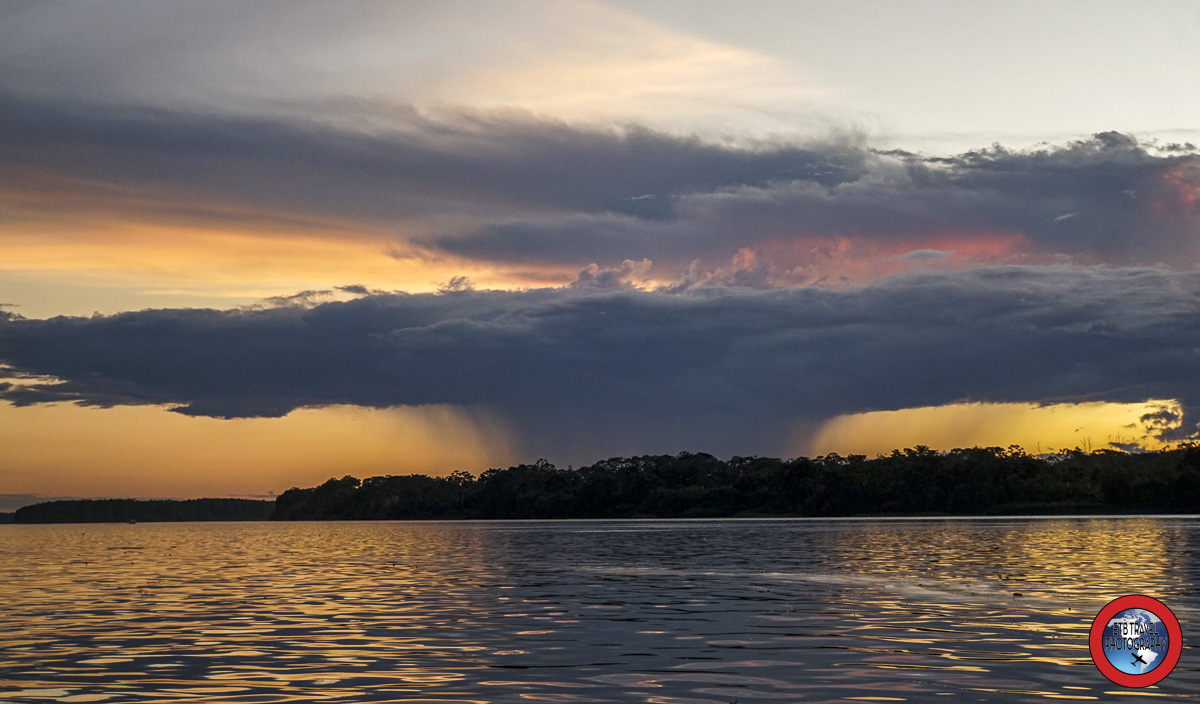
The rainbow boa, curled around a branch in the tree was quite beautiful and the tarantula was giant. Overall, it was a great afternoon hike, and the final sunset of our trip could not be beat. A mixture of rain and sun created a dramatic scene of storm clouds and unique rays of light I’ve never seen.


Amazon Rescue Center
Upon rejoining the Amatista, we enjoyed a lovely final night of dinner and a jam session with an incredibly talented crew. It was a great week cruising the Amazon. The following morning we disembarked in Nauta, and took a private bus along the only road that connects Nauta to another city, Iquitos.
On the way to Iquitos, we stopped to visit CREA, the Amazon Rescue Center. Here we learned about the river manatees. Hunted for their meat and oil, they are listed as vulnerable, but not yet endangered. They had a few they had rescued in small tanks which felt a little disconcerting.
But until they can survive by eating seagrass on their own which takes nearly two years, they must bottle feed them. Eventually, they move to a pond and finally they are released into the wild. The center also has birds, monkeys, turtles, caimans, and aguti. They work to rescue, rehab, release, and raise awareness. Being from Dallas, I was surprised to see one of their partners is the Dallas World Aquarium. What a small world! ETB


Pin It Later
Other Articles About the Amazon You May Like
- Peruvian Amazon: Part I
- Peruvian Amazon: Part II
- Peruvian Amazon: Pacaya-Samiria National Reserve
- The Maranon River in the Amazon
- Culture in the Amazon


Awesome pics! Love the turtle photo!
Thanks!
Great photos
Thank you!
For some reason I thought piranhas were larger than that. Conversely, I didn’t realize anacondas were that large. Yikes!
The ones with the red belly were a little bigger than the silver ones, but yeh, they are small and bony so you have to catch a bunch for a meal!
How interesting to get to experience piranha fishing! Your sunset pictures are stunning- the amazon was giving you a mighty beautiful farewell in those colors 🙂
I know the sunset was crazy!
The sunset is stunning and beautiful photos 🙂